






Adsorption cooling
The Illustrated Guide to Renewable Technologies BG 1/2008, By Kevin Pennycook, published by BSRIA in March 2008, states: ‘Adsorption chillers, like absorption chillers, are driven by an external heat source; however they have the advantage that the required input temperature is between 60oC and 95oC. This means that relatively low cost flat-plate solar collectors can be used to provide the heat source to drive the refrigerant process. An adsorption chiller consists of a pressure vessel divided into four chambers. These are the evaporator (lower chamber), the generator/receiver (second and third chambers) and the condenser (top chamber). The generator and receiver are linked by valves which automatically open depending on the pressure differences within the chiller. Adsorption chillers use water as the cooling medium and silica gel as the adsorbent. At low pressures, water vapourises at low temperatures. Silica gel can bond large amounts of water without loss, reversibly (and without increasing in volume), releasing the water again when heat is applied.’
--BSRIA
[edit] Related articles on Designing Buildings
Featured articles
Check out some of the best features and news from Designing Buildings as well as key stories from around the web.
Undervaluing our industrial past

Heritage value changes as taste for building styles changes.
Changing expectations around competence and compliance

New information sheet from CIAT.
Grenfell investigation files passed to CPS

Angela Rayner apologises on behalf of the British state.

Electrical contractors need to understand the practical implications.

The real barrier to getting more value from digital technology.

Your guide to The Construction Reset at UKCW Birmingham.

Accommodating the Victorian and Edwardian working woman. Book review.
Rethinking passive fire protection in design

PFP demands the same level of design rigour as structure or services.

38% of Gen Zs feel safe when a fire door is wedged open.
Stunning images from around the world
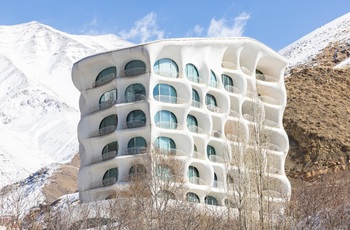
Shortlist for CIOB’s Art of Building photography competition.

Guidance for conversion of traditional pre-1919 stone buildings.
Industrial heritage in the Ruhr
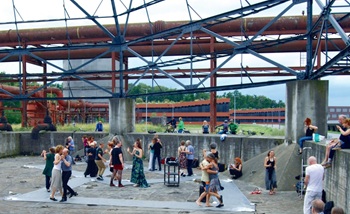
A marked difference to the fate of industrial landscapes in the UK.